
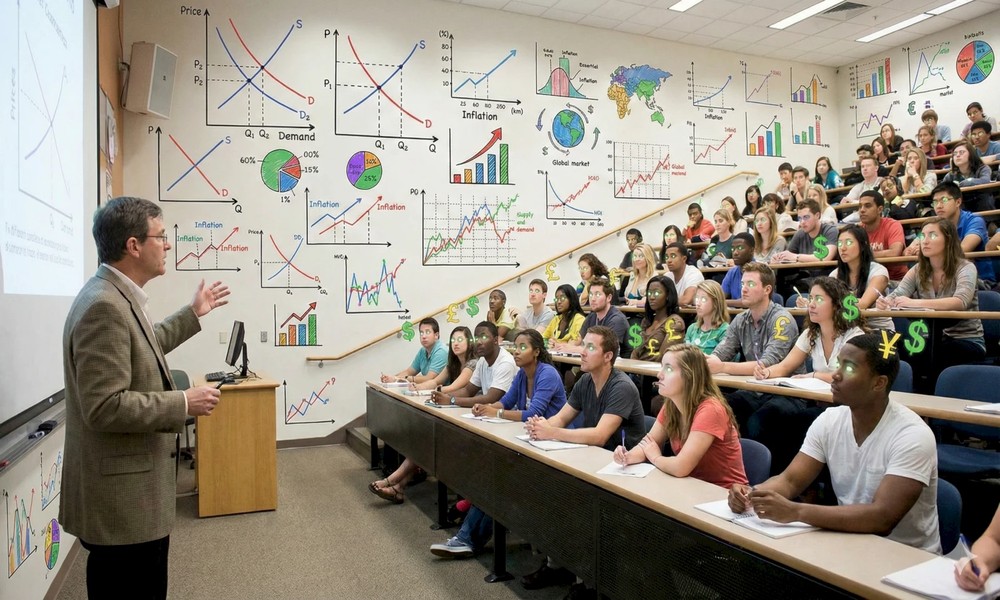
Trade patterns now change faster than classroom models predict. Employers expect graduates understanding currency shifts, regional policy, and supply networks. Modern economics courses answer those expectations through applied learning methods.
Students compare financial behavior across industries, governments, and consumer markets. Singapore Management University economics degree programs attract students seeking practical commercial exposure and analytical depth together.
What Makes International Economics Education More Relevant Today?
Economic decisions now cross borders within single business quarters. Manufacturing delays inside Vietnam affect retailers operating throughout European cities. Grain shortages reshape food pricing across developing African economies. Such connections reshape undergraduate economics teaching approaches across respected universities.
Students examine multiple systems instead of isolated domestic market conditions. Classroom discussions involve tariff disputes, labor shortages, and digital banking expansion. Real corporate examples strengthen theoretical understanding without reducing academic depth. Through comparative analysis, graduates interpret business movement across changing environments confidently.
Skills Employers Value Across International Economic Roles
Global employers seek adaptable graduates handling economic uncertainty without hesitation. Technical knowledge matters, yet communication abilities influence hiring decisions heavily. Financial institutions value graduates explaining complex findings through concise language.
Important capabilities include:
- Statistical interpretation using commercial datasets
- Policy evaluation across trading regions
- Negotiation awareness during multinational operations
- Financial modelling through applied software tools
- Market forecasting during unstable conditions
Strong economics programs combine analytical training with workplace expectations effectively.
Why Data Literacy Shapes Modern Economics Careers
Economic forecasting relies upon accurate interpretation instead of theoretical memorization alone. Students now examine shipping costs, labor movement, and investment behavior simultaneously. Predictive software platforms help undergraduates understand changing market responses rapidly.
For example, students studying inflation may compare fuel pricing internationally. Exchange rate movement often influences retail purchasing behavior across import sectors. Through applied assignments, undergraduates recognize relationships between policy announcements and consumer reactions. Although textbooks explain frameworks clearly, live datasets reveal commercial consequences faster.
How Universities Connect Classrooms With Global Commerce
Financial centers create stronger learning environments for economics undergraduates pursuing international careers. Industry partnerships expose students toward commercial operations beyond academic theory. Internship access often shapes professional readiness before graduation periods begin.
Several universities encourage broader commercial awareness through:
- Overseas exchange semesters
- Joint research partnerships
- Corporate mentoring opportunities
- Regional economic workshops
Singapore Management University economics degree pathways receive attention for integrating academic analysis alongside business exposure. Singapore’s financial infrastructure offers undergraduates direct observation of multinational investment activity and regional trade negotiations.
Can Undergraduate Economics Degrees Prepare Future Policy Analysts?
Public policy careers require economic interpretation grounded within practical market understanding. Governments need analysts evaluating taxation effects, employment patterns, and infrastructure investments carefully. Undergraduate economics education develops those foundations through applied coursework and comparative study.
Students often explore questions involving:
- Cross-border taxation models
- Urban housing affordability pressures
- Export reliance within developing nations
- Digital currency regulation frameworks
Policy analysis demands balanced judgment rather than ideological assumptions alone. Graduates entering advisory positions benefit from exposure toward diverse commercial environments earlier.
Why Asian Market Exposure Matters For Economics Students
Asian economies influence manufacturing, logistics, technology, and international finance extensively today. Undergraduate students studying regional trade systems gain broader commercial awareness naturally. Exposure toward fast-moving economies strengthens analytical adaptability across unpredictable market conditions.
Singapore presents useful examples through shipping networks and financial regulation systems. Students observe multinational firms managing investment decisions within highly competitive environments. Such experiences sharpen commercial reasoning beyond traditional classroom discussion formats. Exposure matters because international employers seek graduates understanding operational realities across interconnected regions.
From Classroom Models To International Decision-Making
A graduate analyzing shipping disruptions understands more than textbook supply chains afterward. Exposure toward exchange rates, regional workshops, and live forecasting tools changes professional thinking permanently. Employers recognize those differences during recruitment conversations immediately. Students entering international economics careers today require broader commercial awareness than previous generations demanded.